The Department of Informal Education
B.Ed. Degree and Education Worker Certificate
"The Department of Informal Education – Educational-Social Leadership in the AI Era"
The Department of Informal Education at Al-Qasemi Academy cultivates educational, social, and community leaders equipped to enact meaningful change within Arab society. The program integrates academic theory, social and informal pedagogy, practical practicum, educational entrepreneurship, technological innovation, and artificial intelligence (AI). This multidisciplinary approach positions the department as a flagship program in AI, underpinned by a resolute social-community vision.
The department operates on an ecological model, conceptualizing education as a dynamic process occurring at the intersection of three domains: the formal domain (schools and systemic frameworks), the community domain (local authorities, NGOs, and youth movements), and the technological-digital domain (innovation, STEAM, AI, and emergent learning environments). This synthesis enables students to formulate professional, culturally sensitive, and relevant interventions tailored to the evolving needs of Arab society.
Informal education functions not merely as an adjunct to formal schooling but as a primary strategic instrument for advancing social mobility, mitigating socio-economic disparities, and empowering youth. The curriculum is grounded in social and informal pedagogy, a holistic paradigm that views education as a mechanism for building personal and community resilience. The objective is to foster active civic participation, community enterprise, and social justice, particularly in response to the complex challenges confronting Arab society in Israel.
The department prepares educational-community leaders characterized by critical thinking, social sensitivity, and a robust professional toolkit encompassing entrepreneurial, digital, and technological skills. Graduates are prepared to operate within local authorities, NGOs, youth movements, community centers, and specialized projects targeting marginalized and at-risk youth. Within this vision, AI is not treated as a peripheral add-on but as an integral component in the preparation of future educators.
1. Social-Community Education: Focuses on cultivating skills in group facilitation, community process development, the management of social ventures, the promotion of civic engagement, and the development of youth leadership, inclusive of STEAM and AI-driven initiatives. Graduates of this division secure roles as social education coordinators within community centers, youth movements, and various community frameworks.
2. Marginalized and At-Risk Youth: Provides training for dynamic-therapeutic engagement with youth experiencing distress, dropout, and alienation. The track emphasizes the development of social-emotional skills and tailored interventions. Graduates work in youth advancement units, welfare initiatives, school inclusion programs, and the Pedagogic Flexibility (Gefen) frameworks.
The program prepares education professionals for modern challenges by using new teaching methods, the STEAM framework, and the smart use of AI in education, research, and community work. Students engage in podcast production, project-based learning (PBL), digital product development, and the creation of socio-technological ventures. Furthermore, they utilize AI tools strategically for community needs analysis, content generation, intervention planning, and the development of innovative solutions.
The department operationalizes innovation rather than merely conceptualizing it. Recently, the curriculum has systematically embedded advanced pedagogical models, such as flipped classrooms, asynchronous learning, PBL, and student-driven deliverables. The department is currently advancing to the next phase: the structured, ethically grounded, and progressive implementation of AI as a core element of the program's academic and professional identity.
- The Single-Major Track (3 years): A specialized pathway (60 weekly academic hours) culminating in a B.Ed. degree and an "Education Worker" certificate. This track is designed for candidates aiming to focus on management, leadership, and entrepreneurship within community domains and municipal youth departments.
- The Double-Major Track (4 years): Provides a dual professional qualification (105 weekly academic hours). In addition to the B.Ed. and "Education Worker" certificate, students earn a certified teaching credential in a secondary discipline, such as computer science, special education, Arabic language and literature, or Islamic studies. This enables graduates to integrate seamlessly into both the formal educational system and the informal community sector.
- Year 1 (2 weekly academic hours): Focuses on exposure, orientation, and the ecological mapping of field organizations and structural dynamics.
- Year 2 (7 weekly academic hours): Involves active integration, encompassing session facilitation, direct work with marginalized and at-risk youth, and community and digital intervention programs (5 hours of supervised practicum + 2 hours of workshop).
- Year 3 (9 weekly academic hours): Centers on leadership, entrepreneurship, and innovation. Students lead independent projects and STEAM and AI initiatives and solidify their professional identity through applied practice, workshops, and a final capstone project (5 hours of practicum + 2 hours of workshop + 2 hours of final project).
Departmental Faculty
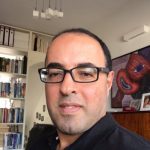
Students are mentored by distinguished academic and professional faculty:

FAQ
General Threshold Requirements:
Eligibility for a full matriculation certificate and fulfillment of one of the following admission tracks: a high-quality matriculation with a minimum average of 92; or a combined psychometric score of at least 540; or the completion of a recognized pre-academic preparatory program equivalent to these threshold criteria. All tracks also necessitate meeting program-specific prerequisites.
Program-Specific Admission Requirements:
General Arabic proficiency requires either 3 study units in Arabic with a minimum grade of 80 or 5 study units with a minimum grade of 70, along with an Arabic entrance examination that must be passed with a minimum score of 70. This track confers on an education worker certificate in accordance with the approved curriculum.
Language Requirements:
- Hebrew: Candidates whose matriculation certificate was not completed in Hebrew must achieve a minimum score of 85 on the YAEL/YAELNET examination; this requirement may be fulfilled by the conclusion of Year 1, subject to institutional regulations.
- Arabic: An Arabic entrance examination with a minimum score of 70 is mandatory for all programs; a minimum score of 75 is required for Arabic language and literature programs.
- Academic English: Placement is determined via the AMIR, AMIRAM, or AMIRNET examinations prior to the commencement of studies or as per college regulations.
Suitability for Teaching and Instruction:
Candidates must successfully complete a teaching suitability evaluation, which may include the MESILAH assessment, a formal interview, a writing assignment, or alternative screening instruments aligned with program protocols and college regulations.
Exceptional Admission:
Permitted for a maximum of 10% of the cohort. Candidates require a matriculation average of 87 or above (in the high-quality matriculation track) or a combined score between 525 and 539 (in the combined track). In both instances, admission is contingent upon a minimum MESILAH score of 5.5, formal justification, and approval from authorized institutional bodies.
Final Approval:
Final matriculation is subject to the submission of original documentation, data verification processes, cohort quotas, academic by-laws, directives from the Council for Higher Education (CHE), Ministry of Education protocols, and internal college regulations.
Registration for Academic programs at Al-Qasemi Academic College
Registration for B.Ed. Degree Programs
Registration for M.Ed. Degree Programs
Registration for the M.Teach Program
Registration for Teaching Certificate and Continuing Education Programs
Registration for Teaching Certificate and Continuing Education Programs – Jerusalem
Registration for the Pre-Academic Preparatory Program