Center for Islamic Legal Guidance and Islamic Studies
Islamic Knowledge, Community Responsibility, and a Balanced Religious Discourse

The Center for Islamic Legal Guidance and Islamic Studies at Al-Qasemi Academic College is a scholarly, religious, academic, and community-oriented framework that strengthens the connection between academic knowledge, responsible Islamic legal guidance, contemporary research, and public service. The Center seeks to provide professional responses to Islamic legal inquiries, encourage knowledge-based Islamic reasoning, and make a balanced, moderate, and respectful religious discourse accessible to the wider public.
The Center is grounded in the understanding that the Islamic tradition is a rich source of values such as humanity, responsibility, justice, balance, compassion, and service to society. Its work emphasizes the humanistic and moderate message of Islam, avoiding extremism, excess, and the reduction of religious and moral values.
In addition to responding to Islamic legal inquiries, the Center encourages research and publication in Islamic law, Islamic thought, education, society, economics, medicine, and ethics. It examines contemporary issues in light of Islamic sources, the needs of people and communities, and the challenges of the present time.
The Center aims to serve as a reliable scholarly, religious, and academic address for the community, researchers, students, and professionals. It promotes a deep understanding of Islam as a religion of knowledge, humanity, moderation, and social responsibility. The Center seeks to strengthen the relationship between academia and the public, disseminate authentic Islamic concepts, encourage research on contemporary issues, and highlight the contributions of Islamic civilization to humanity.
- Public service: Provide professional responses to Islamic legal inquiries submitted by the public, based on Islamic knowledge and responsible scholarly judgment.
- Moderation and responsibility: Promote a balanced religious discourse that emphasizes humanity, moderation, respect, responsibility, and rejection of extremism.
- Contemporary research: Produce studies and publications addressing contemporary Islamic legal, educational, social, economic, medical, and ethical issues.
- Academia and community: Strengthen the connection between academic knowledge and community needs through research, lectures, and study days.
- Civilization and heritage: Introduce Islamic civilization, its heritage, and its contributions to humanity.
- Knowledge development: Encourage researchers, lecturers, and students to explore contemporary issues from a scholarly and balanced Islamic perspective.
The Center serves diverse audiences in society and academia:
- The general public seeking reliable Islamic legal guidance.
- Students of Islamic studies and related fields.
- Researchers in Islamic law, education, society, and ethics.
- Lecturers, educators, imams, community leaders, and social activists.
- Schools, mosques, community centers, and social organizations.
- Professionals dealing with contemporary issues that include religious, social, or ethical dimensions.
- Local and wider communities seeking a professional and moderate Islamic discourse.
- Islamic legal inquiries: Receiving questions from the public and providing professional responses through the Center and its team.
- Islamic legal publications: Publishing fatwas, explanatory materials, and guidance notes on a regular or occasional basis.
- Research and writing: Producing research and studies on emerging and contemporary issues in Islamic law, education, society, economics, and medicine.
- Lectures and study days: Organizing lectures, seminars, study days, and professional meetings on Islam, society, and education.
- Partnerships: Collaborating with scholarly centers, academic institutions, community organizations, and religious institutions locally and internationally.
- Comparative scholarly knowledge: Drawing on fatwas and research issued by Islamic jurisprudence councils and other scholarly institutions.
- Digital accessibility: Using modern communication tools to reach broad audiences inside and outside the country.
- Islamic legal guidance: Daily questions related to faith, worship, family, society, education, and ethics.
- Contemporary issues: Examining current issues in light of Islamic sources, purposes, and principles of moderation.
- Education and values: Values education, moral identity, social responsibility, and respectful dialogue.
- Applied ethics: Medical, economic, social, and technological issues from an Islamic perspective.
- Heritage and civilization: Islamic civilization, history, and contributions to humanity.
- Research and teaching: Development of academic, research-based, and pedagogical knowledge in Islamic studies.
The Center for Islamic Legal Guidance and Islamic Studies combines three central dimensions: Islamic scholarship, academic research, and community service. It does not merely respond to individual questions; it seeks to build a bridge between Islamic heritage and contemporary life.
The Center is committed to a responsible, humane, and balanced religious discourse, while maintaining respect for human dignity, social sensitivity, scholarly rigor, and respectful language. In this way, it strengthens Al-Qasemi Academic College’s role as a space for knowledge, dialogue, educational leadership, and service to society.
- Dedicated website: A platform for receiving Islamic legal inquiries, publishing fatwas, and making information accessible to the public. (Website: click here)
- Digital platforms: Presence on social media and other communication channels. (Facebook: click here)
- Knowledge archive: A scholarly and Islamic legal archive that includes fatwas, studies, and discussions of diverse and contemporary issues.
- Academic expertise: An academic and professional team of lecturers and researchers in Islamic studies.
- Communication tools: Use of email, online forms, website, social media, and phone communication with the public.
- Partnerships: Links with academic institutions, research centers, and specialists in Islamic studies.
FAQ
Team and Contact Information

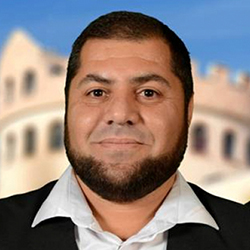



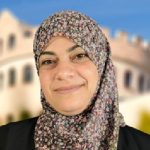


“ The Center for Islamic Legal Guidance and Islamic Studies at Al-Qasemi Academic College seeks to be a bridge between knowledge, faith, and society—a space where religious questions meet research, responsibility, moderation, and service to people and communities ”